

Sustainability in construction has become more than just a buzzword; it is now a critical component in addressing the environmental challenges faced globally. One of the significant contributors to eco-friendly construction is the integration of Sewage Treatment Plants (STPs). STPs play a vital role in sustainable construction by effectively treating wastewater, reducing the overall environmental footprint of a building or project, and promoting water conservation efforts. In this blog, we explore how STPs contribute to sustainability goals, reduce environmental impact, and enhance eco-friendly construction practices.
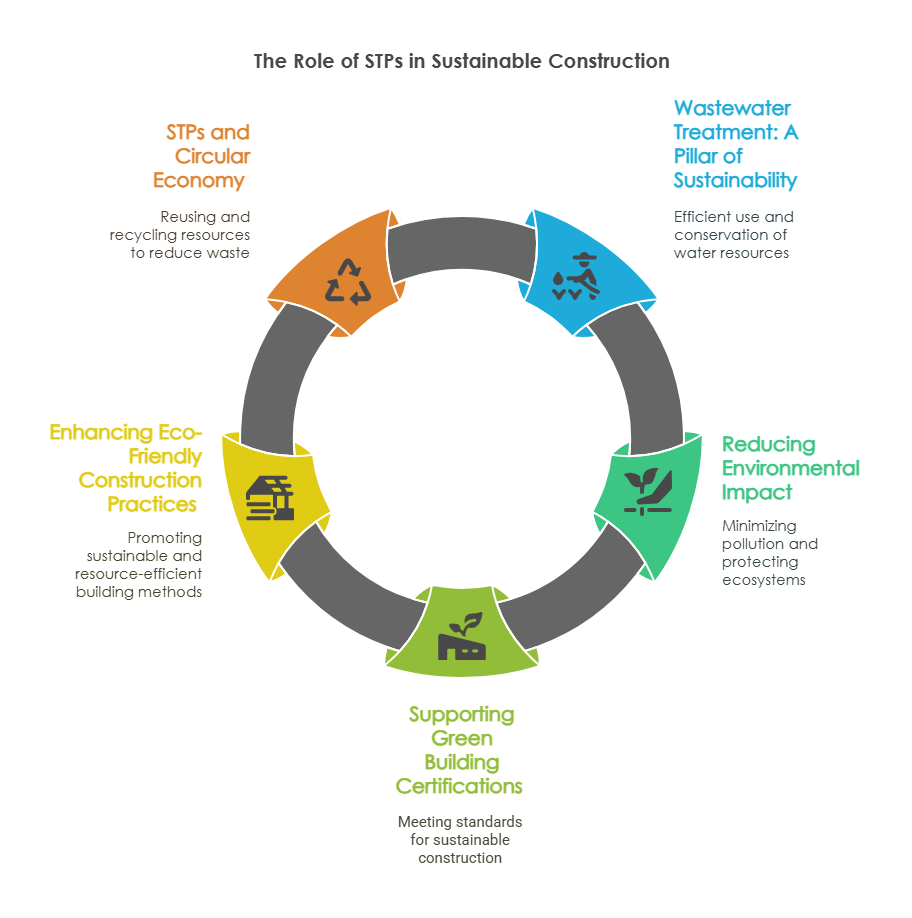
1. Wastewater Treatment: A Pillar of Sustainability
STPs play an essential role in treating and managing wastewater generated by construction sites and residential or commercial buildings. Wastewater often contains harmful chemicals, organic matter, and pathogens that can contaminate water sources if left untreated. STPs purify wastewater through various biological, chemical, and mechanical processes, making it suitable for reuse or safe release into the environment. Modern approaches include decentralized wastewater treatment systems that offer flexible and efficient solutions.
By incorporating STPs into construction projects, project managers contribute directly to sustainable water management. They can reuse treated water for non-potable purposes such as irrigation, cooling systems, or toilet flushing. This reduces the demand for fresh water and minimises the strain on natural water resources.
2. Reducing Environmental Impact
One of the primary environmental challenges of construction projects is the potential for water pollution. Without proper treatment, wastewater discharged from construction sites can carry pollutants into rivers, lakes, and oceans, harming aquatic ecosystems and biodiversity.
STPs ensure that the discharged water meets regulatory standards for environmental protection, thus reducing the negative impact on surrounding ecosystems. They also help prevent waterborne diseases by treating sewage and industrial wastewater, ensuring harmful pathogens and chemicals are removed before water is released.
3. Supporting Green Building Certifications
STPs are increasingly being integrated into green building certifications like LEED (Leadership in Energy and Environmental Design) and BREEAM (Building Research Establishment Environmental Assessment Method). Both certifications emphasise sustainability, water conservation, and efficient resource management.
Incorporating STPs into construction projects aligns with these green building standards by reducing water usage, enhancing energy efficiency, and supporting wastewater management practices. Integrating STPs into green design ensures projects meet sustainability criteria effectively. Projects that use sustainable water management solutions like STPs are more likely to earn higher certification ratings, showcasing their commitment to environmental responsibility.
4. Enhancing Eco-Friendly Construction Practices
The integration of STPs into construction projects reflects a broader shift toward eco-friendly construction practices. These practices aim to reduce the carbon footprint, minimise resource consumption, and promote long-term environmental sustainability. By treating and reusing wastewater on-site, construction companies significantly cut down on water consumption and lower the overall demand for freshwater resources.
In areas with water scarcity or strict water usage regulations, STPs allow projects to operate within sustainable limits. The treated water can be used for landscaping, flushing toilets, or even in construction processes like concrete mixing, further reducing reliance on freshwater sources.
5. STPs and Circular Economy
STPs contribute to the concept of a circular economy in the construction industry, where waste products are reused or recycled instead of being discarded. By treating wastewater and allowing it to be reused in various ways, STPs help close the loop in water management, reducing both waste and the demand for new resources.
For example, treated wastewater can be used for irrigation or industrial cooling, creating a more sustainable and self-sufficient project environment. By treating and reusing water, construction projects not only lower their environmental impact but also reduce operational costs associated with water procurement and disposal.
Conclusion
STPs are crucial to sustainable construction projects, serving as a cornerstone for effective wastewater management and environmental protection. They enable construction projects to meet sustainability goals, minimise their environmental footprint, and contribute to the growing demand for eco-friendly building practices.
By integrating STPs into construction projects, developers and project managers ensure that their projects are more resilient, environmentally responsible, and aligned with global sustainability standards. As the demand for sustainable construction continues to rise, the role of STPs in supporting a greener future will only grow in importance.
Key Takeaways:
- STPs treat and recycle wastewater, reducing the demand for fresh water.
- They help meet environmental regulations and prevent water pollution.
- STPs support green building certifications and eco-friendly practices.
- They reduce operational costs by reusing treated water for non-potable purposes.
- With STPs, construction projects are not just building for today—they are building for a more sustainable tomorrow.