


In recent years, the construction industry has experienced a major shift towards sustainability and green building practices. With growing concerns about climate change, environmental degradation, and resource depletion, the need for eco-friendly construction strategies has become increasingly urgent. Construction project managers play a key role in adopting sustainable practices that benefit the environment, improve project efficiency, reduce costs, and enhance long-term value.
This blog explores the rising significance of sustainability in construction and offers strategies for project managers to implement green building practices in their projects.
The Growing Importance of Sustainable Construction
The construction industry is one of the largest consumers of natural resources, contributing significantly to global energy use, waste generation, and carbon emissions. According to the World Green Building Council, buildings account for 39% of global energy-related carbon emissions. As urbanisation accelerates, the environmental impact of construction activities becomes more pronounced.
Recognising the need for change, governments, industry leaders, and consumers are advocating for more sustainable building practices. The green building movement is gaining momentum, driven by the desire to minimise the negative environmental effects of construction and create healthier living spaces. Green building certification systems like LEED (Leadership in Energy and Environmental Design) and BREEAM (Building Research Establishment Environmental Assessment Method) are becoming more popular, offering guidelines for environmentally responsible construction.
Key Benefits of Sustainable Construction
Adopting sustainable practices in construction offers numerous advantages for the environment, economy, and society. Some of the key benefits include:
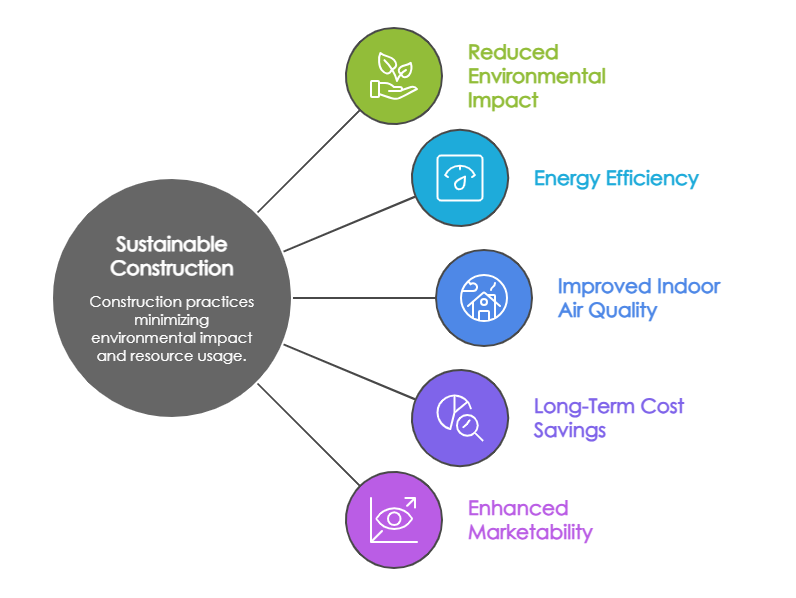
- Reduced Environmental Impact: Sustainable construction practices reduce waste, energy consumption, and carbon emissions. By using eco-friendly materials, recycling waste, and incorporating renewable energy sources, project managers can significantly reduce the environmental footprint of their projects.
- Energy Efficiency: Green buildings are designed to be more energy-efficient, resulting in lower operational costs in the long run. Incorporating features like solar panels, energy-efficient HVAC systems, and natural lighting can lower utility bills and reduce energy consumption.
- Improved Indoor Air Quality: Sustainable construction promotes the use of non-toxic, eco-friendly materials that improve indoor air quality. This leads to healthier and more comfortable living and working environments for occupants.
- Long-Term Cost Savings: While the initial investment in green building materials and technologies may be higher, the long-term cost savings from reduced energy consumption, lower maintenance requirements, and increased property value often outweigh the upfront costs.
- Enhanced Marketability: Buildings that meet green certification standards are becoming more attractive to investors, tenants, and buyers. Sustainability is now seen as a value proposition, and projects prioritising eco-friendly practices often have a competitive edge in the marketplace.
Sustainable Strategies for Construction Project Managers
Construction project managers play a pivotal role in driving sustainability throughout the project lifecycle. By incorporating green building strategies from the planning stage to project completion, they can ensure that sustainability goals are achieved. Here are some effective strategies for integrating sustainability into construction projects:
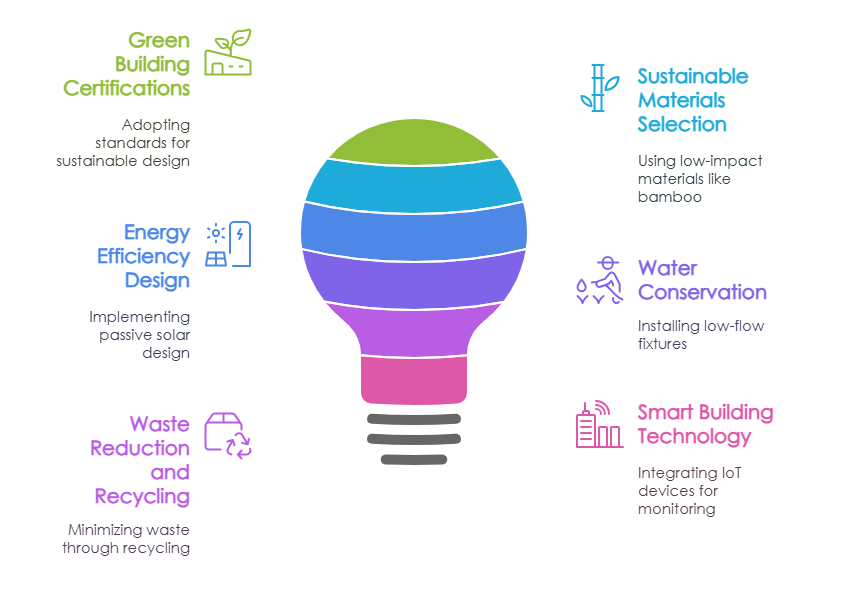
1. Green Building Certifications
Obtaining certifications like LEED, BREEAM, or WELL Building Standard ensures that sustainability remains a priority throughout the project. These certifications provide frameworks for designing, constructing, and operating buildings in an environmentally responsible way.
How to implement:
- Engage with green building consultants early in the project planning process.
- Set clear sustainability goals aligned with certification requirements.
2. Sustainable Material Selection
Choosing eco-friendly materials that are renewable, recyclable, and have a low environmental impact is essential for green construction. These materials reduce resource consumption and improve the building’s sustainability. Modern innovations like smart reinforcement techniques can also contribute to both sustainability and cost efficiency.
How to implement:
- Prioritise materials with low embodied energy, such as bamboo, recycled steel, and reclaimed wood.
- Use locally sourced materials to reduce transportation emissions and support local economies.
3. Energy-Efficient Design
Designing buildings to optimise energy efficiency is a key element of green construction. Project managers can incorporate features such as passive solar design, insulation, and energy-efficient lighting to reduce the building’s energy consumption.
How to implement:
- Incorporate renewable energy sources like solar panels or wind turbines into the building’s design.
- Use advanced insulation techniques to minimise heating and cooling needs.
4. Water Conservation
Water-efficient systems can reduce water consumption in buildings and minimise waste. Rainwater harvesting, low-flow fixtures, greywater recycling systems, and decentralized wastewater treatment can all contribute to significantly decreasing water usage. Modern water recycling and STPs play a crucial role in sustainable water management.
How to implement:
- Install low-flow faucets, toilets, and showerheads to reduce water use.
- Utilise rainwater harvesting systems to collect and reuse water for landscaping or non-potable purposes.
5. Waste Reduction and Recycling
Construction projects generate large amounts of waste, but project managers can implement waste reduction and recycling programmes to minimise landfill contributions.
How to implement:
- Develop a waste management plan that includes recycling and reusing construction materials.
- Encourage the use of modular and prefabricated construction techniques to reduce material waste.
6. Smart Building Technology
Utilising technology to monitor and manage energy usage, water consumption, and indoor air quality can improve the sustainability of a building. Smart building systems allow for real-time data monitoring and automated adjustments to optimise resource use. Additionally, using BIM to plan sustainable design enables better coordination and efficiency throughout the construction process.
How to implement:
- Integrate IoT devices and sensors to track energy and water usage in real-time.
- Implement building automation systems (BAS) to control HVAC, lighting, and other systems efficiently.
Throughout all these strategies, project managers must focus on optimizing cost without compromising sustainability, ensuring that green building practices remain economically viable while delivering maximum environmental benefits.
Conclusion
The shift towards sustainable construction is no longer optional; it is essential for the future of the construction industry and the environment. By adopting green building practices, project managers not only contribute to environmental conservation but also improve the long-term performance and value of their projects. From selecting eco-friendly materials to integrating smart building technologies, there are many ways to make construction more sustainable.
At ANPCPMC, we remain committed to building a greener, more sustainable future by integrating innovative solutions and sustainable practices into every project we undertake. By focusing on sustainability, we can help create a better, more resilient built environment for future generations.
Key Takeaways:
- Sustainable construction reduces environmental impact and provides long-term cost savings.
- Green building certifications, energy-efficient designs, and smart technologies promote sustainability.
- Project managers play a vital role in implementing eco-friendly strategies throughout the project lifecycle.