


In construction, selecting the right type of structural system is crucial for ensuring the safety, durability, and efficiency of a building. The two primary structural systems often used are load-bearing structures and frame structures. Both have distinct characteristics, advantages, and applications. Below, we’ll explore the key differences between these two systems and their implications for construction projects in terms of cost, timeline, and long-term durability.
1. Load-Bearing Structures
A load-bearing structure is a traditional form of construction where the walls carry the weight of the roof and any upper floors, transferring the load directly to the foundation.
Key Characteristics:
- Heavy, Solid Walls: The weight of the structure is supported by the walls. Common materials include brick, stone, or concrete.
- Vertical Load Distribution: The load is distributed vertically through the walls.
- Fewer Openings: Since the walls must bear the load, fewer large openings like windows and doors can be accommodated.
- Height Limitations: Load-bearing structures are typically limited to low-rise buildings due to the weight and stress on the walls.
Applications:
- Commonly used in residential houses, historical buildings, and low-rise commercial buildings.
- Often found in older buildings before modern construction techniques emerged.
- For more information on contract types based on structure.
Implications:
- Cost: Load-bearing structures tend to be more cost-effective for smaller buildings because they use materials like bricks or blocks, which are less expensive than steel or reinforced concrete.
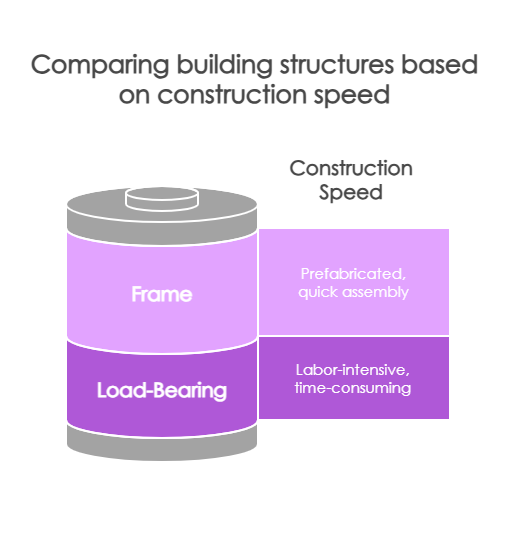
- Timeline: Since load-bearing construction is more labor-intensive, the timeline may be longer compared to modern techniques like frame structures.
- Durability: Load-bearing structures are highly durable if built with quality materials but may not be as flexible for future modifications or expansion.

2. Frame Structures
In a frame structure, the building’s load is supported by a skeletal framework of columns and beams, with the walls serving as partitions rather than load-bearing elements.
Key Characteristics:
- Skeleton of Beams and Columns: The weight of the building is carried by a skeleton made of materials like steel or reinforced concrete.
- Horizontal Load Distribution: The load is distributed through the beams and columns to the foundation.
- Greater Flexibility: Frame structures allow for larger openings in walls for windows, doors, and other architectural features.
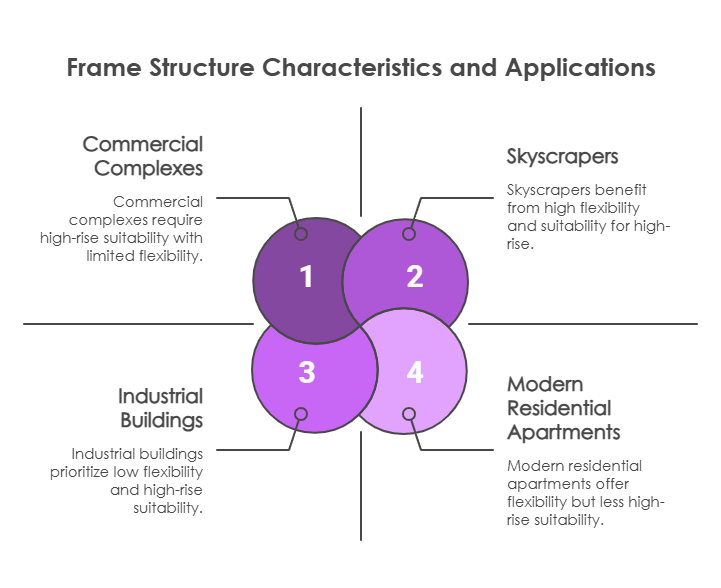
- Suitable for High-Rise: Frame structures are the go-to system for high-rise buildings and skyscrapers due to their ability to handle vertical and lateral loads more effectively.
Applications:
- Widely used in high-rise buildings, commercial complexes, industrial buildings, and modern residential apartments.
- Also ideal for structures that require flexibility in design, such as office spaces, where interior layouts might change.
Implications:
- Cost: While more costly than load-bearing structures in terms of materials (like steel or reinforced concrete), frame structures offer savings through shorter construction times and reduced labor costs.
- Timeline: The construction process is faster because of the prefabrication of components and ease of assembly.
- Durability and Flexibility: Frame structures are highly durable and allow for future expansions or renovations without compromising the integrity of the building. They also perform better under lateral forces like earthquakes and wind loads.
3. Key Differences
| Feature | Load-Bearing Structures | Frame Structures |
| Weight Distribution | Vertical, through walls | Through beams and columns |
| Material | Brick, stone, and concrete | Steel, reinforced concrete |
| Height | Low-rise, typically less than 4 stories | Suitable for high-rise buildings |
| Cost | More economical for small buildings | Higher initial cost, but faster to build |
| Flexibility | Limited flexibility for modifications | Highly flexible for future changes |
| Construction Speed | Slower, more labor-intensive | Faster due to prefabrication |
Conclusion
The decision between a load-bearing structure and a frame structure depends on the specific needs of the project, including its size, complexity, budget, and future flexibility. Load-bearing structures are ideal for smaller, more traditional buildings, while frame structures are better suited for modern, large-scale developments where height and flexibility are key considerations. Both systems have their merits, and understanding the differences can help in selecting the right approach for your construction project. Consider optimizing cost with design when making your structural decisions.
At ANPCPMC, we specialize in providing expert consultation and construction project management services to ensure that your project’s structural system is not only efficient but also aligned with your long-term goals.