

Introduction
In today’s competitive Indian construction sector, success depends on more than just technical know-how. Whether you are a Project Manager, Cost and Contract Manager, Engineer, or a client, you would have realised that technical brilliance alone does not guarantee smooth project delivery. Equally important are soft skills such as communication, leadership, emotional intelligence, and conflict resolution.
Construction Project Management Consultancy (CPMC) thrives at the intersection of these two worlds: technical skills ensure precision and compliance with design, cost, and safety standards, while soft skills ensure harmony among diverse stakeholders, timely decisions, and the creation of long-term trust.
This blog dives deep into how construction professionals can balance technical skills with soft skills, why this balance matters in the Indian context, and how organisations like AN Prakash Construction Project Management Consultants (ANPCPMC) successfully apply these principles across projects.
The Two Pillars of Success: Technical and Soft Skills
1. Technical Skills – The Foundation of Construction Expertise
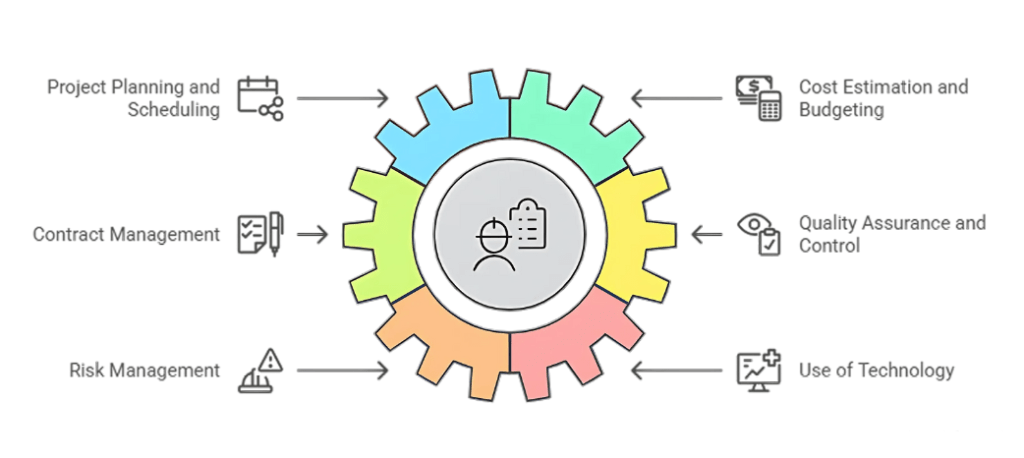
Technical skills in construction project management include:
-
Project Planning and Scheduling – preparing realistic schedules using tools like Primavera or MS Project.
-
Cost Estimation and Budgeting – applying standard methods (e.g., IS codes, CPWD practices) for cost planning.
-
Contract Management – drafting, interpreting, and enforcing agreements to avoid disputes.
-
Quality Assurance and Control – ensuring materials, workmanship, and processes meet standards.
-
Risk Management – anticipating and mitigating risks related to design, safety, or environment.
-
Use of Technology – BIM, ERP, and digital site monitoring for improved decision-making.
These skills are tangible, measurable, and often learned through formal education, certifications, and on-the-job training.
2. Soft Skills – The Human Side of Construction
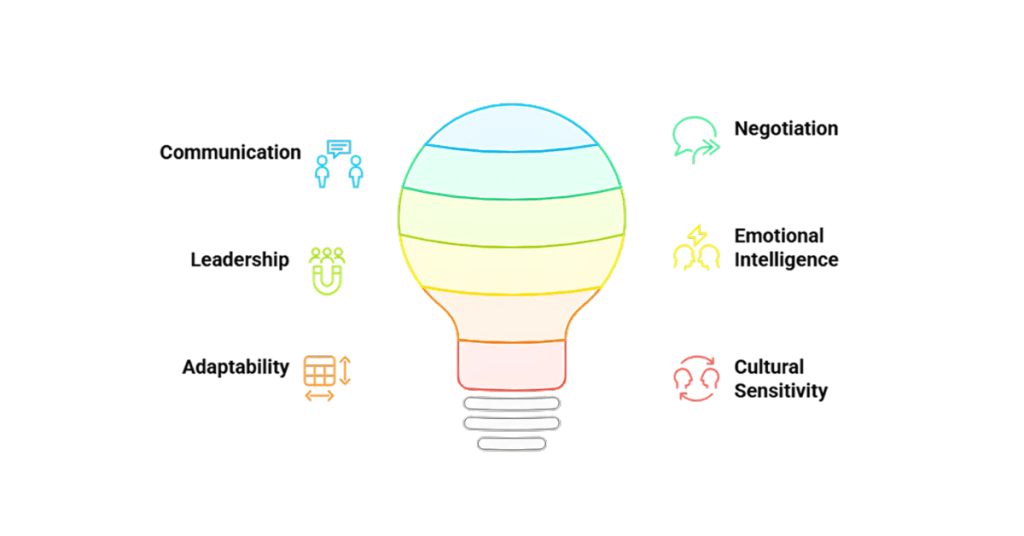
Soft skills are often overlooked but form the glue that holds technical knowledge together. In construction, they include:
-
Communication – clear and concise sharing of information with workers, clients, and consultants.
-
Negotiation – resolving cost and scope issues without creating hostility.
-
Leadership – motivating teams to deliver beyond expectations.
-
Emotional Intelligence – managing stress, building trust, and handling conflict calmly.
-
Adaptability – adjusting to changes in design, client expectations, or site challenges.
-
Cultural Sensitivity – respecting local practices, languages, and traditions in a diverse country like India.
While technical skills build credibility, soft skills build relationships. Together, they ensure project success.
Why Balance Matters in Top Construction Project Management Consulting Firms
Complex Stakeholder Environment
Indian construction projects often involve multiple stakeholders – government agencies, private developers, contractors, consultants, vendors, and end-users. Balancing technical clarity with soft skills in negotiation and communication helps align diverse expectations. Effective cross-functional communication is crucial for managing these complex relationships and ensuring project success.
Rapid Urbanisation and Smart Cities
With Smart Cities, metro rail, and large residential complexes coming up, technical precision must go hand in hand with collaboration and adaptability.
Cultural and Workforce Diversity
Construction sites in India bring together engineers from IITs and NITs, diploma holders, contract labourers, and international consultants. Leaders must combine technical supervision with empathy, cultural understanding, and people management.
Risk of Delays and Cost Overruns
Projects often face delays due to approvals, land issues, or material shortages. Soft skills like problem-solving and stakeholder communication minimise escalations while technical skills ensure corrective action.
Client Expectations
Today’s clients are more informed. They not only demand technical compliance but also expect transparency, collaboration, and responsiveness—qualities rooted in soft skills.
Technical Skills in Detail – A Construction Perspective
Project Scheduling and Time Management
-
Tools: Primavera, MS Project, Tilos.
-
Techniques: Critical Path Method (CPM), resource levelling, and delay analysis.
-
Indian Case: Metro rail projects where timely milestone achievement ensures government funding release.
Cost Management and Estimation
-
Techniques: Rate analysis, BOQ preparation, value engineering.
-
Standards: CPWD rates, IS codes.
-
Example: A hospital project in Hyderabad saved 12% costs using value engineering.
Contract Administration
-
Knowledge of FIDIC, CPWD contracts, and arbitration procedures.
-
Effective claim management.
Quality and Safety Management
-
Use of QA/QC checklists (cement testing, cube strength tests, weld inspections).
-
Adhering to NBC and IS codes.
-
Zero-accident culture through safety audits.
Digital Tools and Emerging Technologies
-
BIM for clash detection.
-
Drones for site progress monitoring.
-
ERP for integrated project data.
Soft Skills in Detail – The Missing Link in Many Projects
Communication Excellence
-
Writing clear emails and MOMs.
-
Using bilingual communication at sites (English + local language).
-
Example: A project in Karnataka improved labour productivity by 15% after supervisors started daily toolbox talks in Kannada.
Leadership and Team Motivation
-
Leading by example.
-
Celebrating small wins.
-
Rotating responsibilities to build ownership.
- Effective leadership and communication are essential for building cohesive teams that deliver exceptional results.
Conflict Resolution
-
Listening actively.
-
Identifying root causes instead of blaming.
-
Mediation between the client and contractor disputes.
Negotiation Skills
-
Balancing cost optimisation with the contractor’s sustainability.
-
Win-win approach instead of adversarial tactics.
Cultural Sensitivity and Emotional Intelligence
-
Understanding festivals, regional working styles, and local laws.
-
Example: Adjusting site schedules during harvest season in rural projects to retain labour.
How to Develop the Right Balance
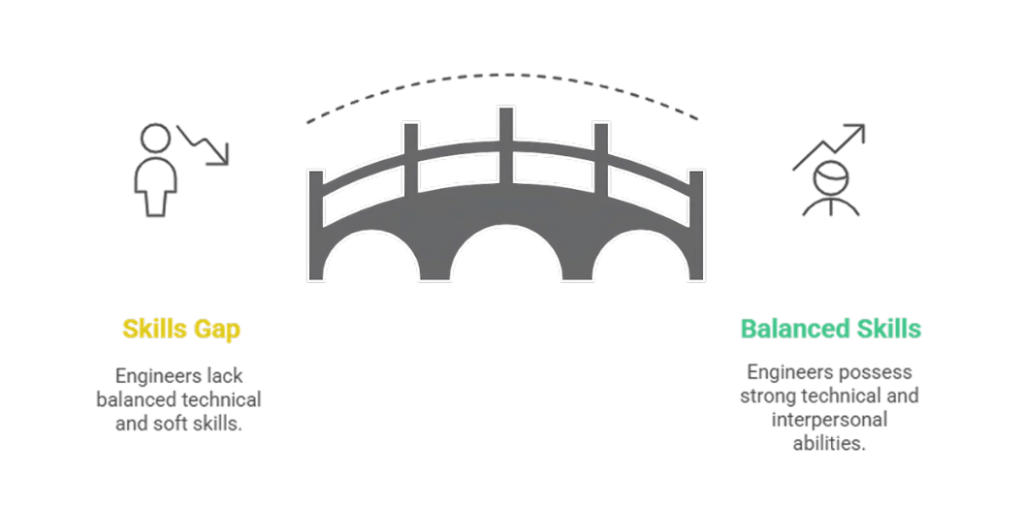
Training and Capacity Building
Regular workshops on both technical tools (Primavera, BIM) and soft skills (communication, conflict resolution).
ANPCPMC regularly conducts internal knowledge-sharing sessions combining these aspects.
Mentoring and Coaching
Senior professionals guiding young engineers on both technical and interpersonal aspects.
Cross-Functional Exposure
Engineers should spend time on estimation, site execution, and client coordination to gain holistic skills.
Feedback Culture
360-degree feedback systems are used to identify gaps in both skill sets.
Professional Certifications
PMP, RICS, or NICMAR courses often integrate technical with managerial soft skills.
Case Studies – Lessons from Indian Projects
Residential Township in Bengaluru
-
Technical Mastery: Complex MEP coordination using BIM.
-
Soft Skill Highlight: Continuous client updates reduced scope creep.
IT Campus in Hyderabad
-
Technical: Achieved LEED Gold certification.
-
Soft Skill: Cross-cultural team management with US-based client.
Hospital Project in Chennai
-
Technical: Fast-track schedule with modular construction.
-
Soft Skill: Negotiation with vendors ensured material delivery during the pandemic.
Challenges in Balancing Skills
-
Overemphasis on technical training in engineering colleges, with a limited focus on soft skills.
-
Resistance from senior engineers who undervalue communication.
-
Clients sometimes misinterpret soft skills as a lack of technical strength.
-
Language barriers in diverse teams.
Best Practices for Organisations
-
Recruitment: Assess both technical knowledge and interpersonal aptitude.
-
Performance Metrics: Reward not only technical achievements but also teamwork and leadership.
-
Continuous Learning: Encourage employees to attend both technical and behavioural workshops.
-
Role Modelling: Senior leaders should demonstrate balanced behaviour.
Organizations must focus on promoting continuous learning to stay competitive and ensure their teams remain updated with both technical advancements and soft skill development.
Conclusion
The Indian construction industry is at a critical juncture where technical expertise and soft skills must work together for project excellence. Engineers, project managers, and clients who master this balance can ensure timely delivery, cost savings, safety, and satisfaction for all stakeholders.
At AN Prakash Construction Project Management Consultants, we believe in nurturing well-rounded professionals. Our success across 169 million sq. ft. built-up area and 75+ ongoing projects comes from a culture that equally values technical precision and human connection.