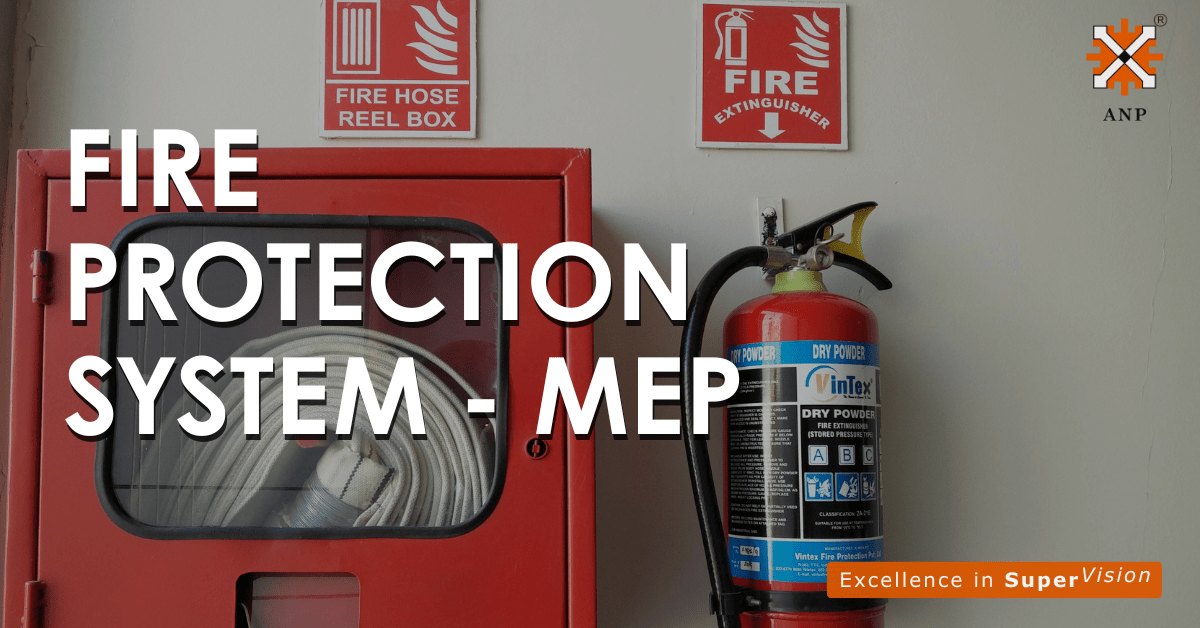
In today’s construction industry, ensuring occupant safety remains a top priority. Fire protection systems play a crucial role in safeguarding buildings from fire hazards. We must integrate these systems—such as sprinklers, smoke detectors, alarms, and fire suppression systems—into Mechanical, Electrical, and Plumbing (MEP) designs to meet all fire safety norms and building codes. Let us explore how fire protection systems and MEP engineering come together to protect buildings effectively.
Fire Protection Systems – How They Safeguard Buildings
Fire protection systems help detect, control, and suppress fire outbreaks, allowing people time to evacuate safely and minimizing damage to property. These systems include:
Fire Alarms
These alert occupants and emergency responders early in the event of a fire.
Sprinkler Systems
Automatically release water when activated by heat, effectively controlling the spread of fire.
Smoke Detectors
Detect smoke quickly and trigger alarms to prompt evacuation and response.
Fire Suppression Systems
Used in sensitive environments like data centers, these systems deploy gases or chemicals to suppress fires without water damage.
To function effectively, these systems must be tightly integrated with MEP services for successful real-world fire safety implementation.
Integrating Fire Protection with MEP Services
Proper integration ensures fire safety is embedded into the core building design from the outset—not added as an afterthought.
HVAC Systems for Smoke Management
Heating, Ventilation, and Air Conditioning (HVAC) systems regulate airflow. During a fire, HVAC systems must control smoke movement. Fire dampers installed in ducts close automatically upon smoke or heat detection, limiting smoke spread.
Plumbing for Sprinkler Networks
Sprinkler systems rely on the building’s plumbing network. MEP design ensures consistent and pressurized water supply. Engineers also plan for storage tanks and fire pumps to support these systems under high demand.
Electrical Support for Fire Alarms and Detection
All alarms and detection systems need robust electrical infrastructure. The electrical design should include uninterrupted power supply (UPS) units or diesel generators to maintain functionality during outages.
Special Systems for Critical Areas
In server rooms and control centers, water can cause significant damage. MEP engineers instead integrate gas-based or chemical suppression systems, which must be precisely coordinated with other MEP services.
Ensuring Compliance with Fire Safety Norms
MEP engineers and project managers must follow mandatory standards and codes when designing and installing fire protection systems:

- NFPA Standards: For example, NFPA 13 (sprinkler systems) and NFPA 72 (fire alarm systems).
- IBC (International Building Code): Specifies egress routes, smoke control, and fire protection layouts.
- Local Fire Norms: Additional guidelines from local authorities based on building use or region.
Adhering to these ensures clearance for occupancy and legal compliance.
Importance of Early Coordination
Fire protection systems work best when all stakeholders collaborate from the design stage through effective coordination between MEP and civil teams. This includes architects, MEP engineers, fire consultants, contractors, and clients.
Early coordination ensures:
- Proper space allocation
- Seamless system integration
- Avoidance of costly last-minute revisions
- Full code compliance
Common Challenges & Practical Solutions
1. Limited Space
Challenge: Modern compact designs leave little room for system installations.
Solution: Combine MEP services within shared vertical shafts and select compact suppression units.
2. System Compatibility
Challenge: All components—alarms, sprinklers, detectors, dampers—must function cohesively.
Solution: Engineers must define interfaces clearly and test using simulations.
3. Maintenance Accessibility
Challenge: Access must be provided for regular system checks.
Solution: MEP layouts should reserve maintenance zones and allow easy access to all components through proper safety management integration.
Key Takeaways
- Integrated Safety: Fire safety systems must be aligned with MEP design for effective performance.
- MEP Support: Plumbing, HVAC, and electrical systems form the backbone of fire protection.
- Regulatory Compliance: Adherence to international and local codes ensures legal and safety benchmarks are met.
- Early Planning: Cross-disciplinary coordination avoids complications and enhances safety outcomes.
- Smart Design: Proactively addressing space, compatibility, and maintenance leads to resilient fire protection strategies.